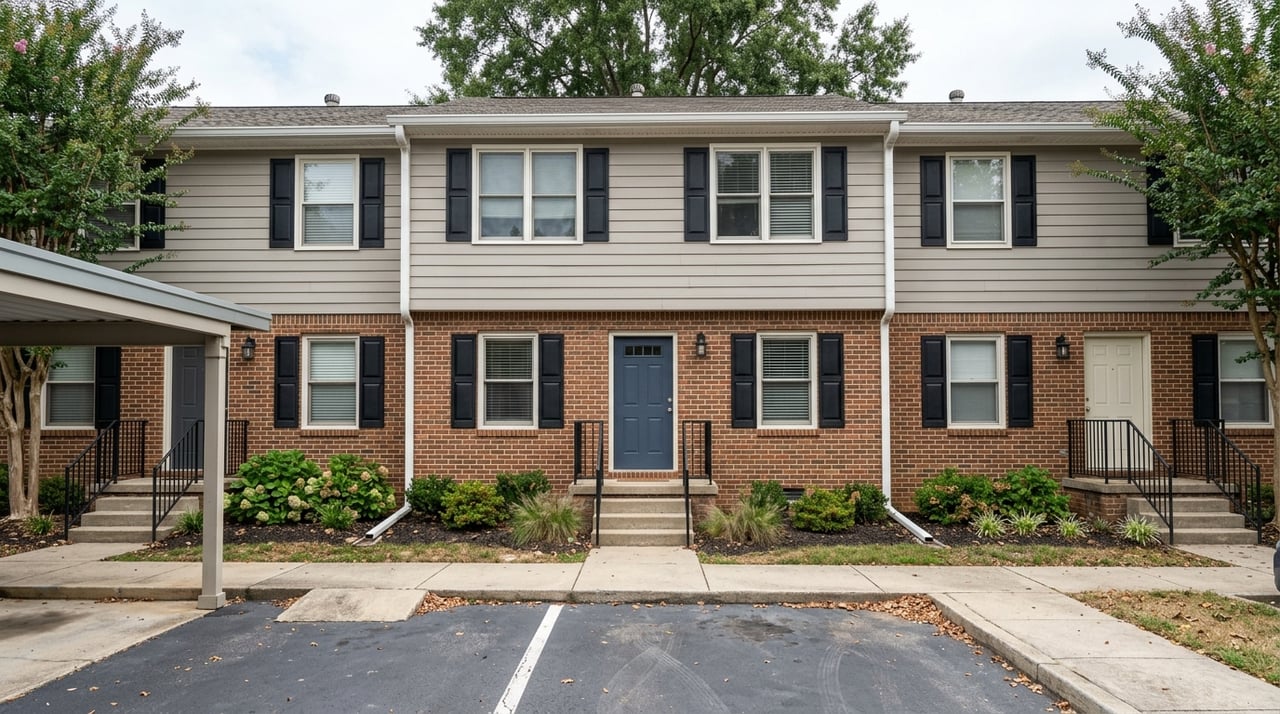
If you want a home in Chapel Hill but a detached house feels out of reach, a townhome or condo may be the smart middle ground. You may be balancing price, maintenance, location, and lifestyle all at once, especially if you are relocating or trying to stay close to the places you use every day. This guide will help you compare condos and townhomes in Chapel Hill, understand the real monthly cost, and know what to review before you make an offer. Let’s dive in.
Chapel Hill Attached Homes at a Glance
In Chapel Hill, attached housing is often more affordable than a detached home, but it is still a meaningful investment. Current median sale prices show about $894,545 for single-family homes, $460,080 for townhouses, and $323,377 for condo and co-op homes. That puts townhomes well below detached homes on price, while condos often offer the lowest entry point.
Active listings show a similar pattern. Current condo inventory sits around a median listing price of $303,000, while townhouses are closer to $485,000. Market time also differs, with condos around 59 days and townhouses around 44 days in the current snapshot.
That pricing gap matters if you are comparing monthly payments, down payment needs, or how much space you can afford. In many cases, a condo helps you buy into Chapel Hill at a lower price point, while a townhome may give you more room and privacy without reaching detached-home pricing.
Why Chapel Hill Inventory Can Feel Tight
If you have searched attached homes in Chapel Hill and felt like good options go quickly or choices feel limited, there is a reason. Chapel Hill planning materials show that only 5% of units built since 2010 are owner-occupied condos or townhouses. Much of the town is also zoned for single-family-only use.
The town also reports that 36% of households are cost-burdened and that Chapel Hill needs about 500 housing units each year. A 2023 market assessment found vacancy rates had fallen across both for-sale and rental housing, which suggests supply has not kept up with demand. In plain terms, attached homes often draw strong interest because they serve a real need in the local market.
For buyers, this means preparation matters. If you want a condo or townhome in a well-located Chapel Hill community, it helps to know your budget, review the ownership structure early, and understand your must-haves before you tour homes.
Condo vs. Townhome in Chapel Hill
At a high level, condos and townhomes often serve different priorities. A condo usually offers the most convenience and shared amenities, while a townhome often gives you more space and a bit more separation from neighbors. In Chapel Hill, current pricing reflects that middle position.
Many local listings highlight low-maintenance living, which is one of the biggest draws of attached housing. Depending on the community, you may see features like pools, clubhouses, pickleball courts, balconies, patios, storage areas, garages, covered terraces, fireplaces, quartz counters, and hardwood floors.
Here is a simple way to think about the tradeoff:
When a Condo May Fit Better
A condo may be a better fit if you want:
- A lower purchase price than most townhomes or detached homes
- Less exterior upkeep responsibility
- Shared amenities in the community
- A simpler lock-and-leave lifestyle
- Access to Chapel Hill locations that might be harder to reach in a detached-home budget
When a Townhome May Fit Better
A townhome may be a better fit if you want:
- More interior space than many condos
- More privacy than a typical condo layout
- Less maintenance than a detached house
- A price point below most single-family homes
- A balance between convenience and room to spread out
Location Often Matters More Than Label
In Chapel Hill, the exact location of a home can shape your day-to-day life as much as whether it is a condo or townhome. Redfin describes the town as minimally walkable, with a Walk Score of 34, Transit Score of 37, and Bike Score of 50. That means convenience often comes down to where the property sits within town and how it connects to your routines.
Popular attached-housing areas in Chapel Hill include Franklin-Rosemary, Meadowmont, Falconbridge, Southern Village, Downtown Chapel Hill, The Oaks, Downing Creek, and Lakevue. Each area can offer a different mix of access, setting, and housing style. If you are relocating, it is especially helpful to compare not just price, but how each location supports your commute, errands, and preferred pace of life.
Look Beyond the Purchase Price
One of the biggest mistakes buyers make is comparing attached homes by list price alone. In Chapel Hill, HOA dues on current attached listings range from about $300 to $558 per month. That can have a major effect on your true monthly housing cost.
To make a fair comparison, review these costs together:
- Purchase price
- Monthly HOA dues
- Homeowners insurance
- Possible special assessments
A lower-priced condo with higher dues may cost more each month than a higher-priced townhome with lower dues. The right choice depends on the full picture, not just the list price that first grabs your attention.
Understand the Legal Structure First
This step is easy to miss, but it matters. In North Carolina, the legal ownership structure, not just the exterior style, determines how a community is governed and what the owner must insure and maintain.
Condominiums are governed by Chapter 47C. Many townhome communities are planned communities governed by Chapter 47F. That difference can affect your obligations, the association’s responsibilities, and the documents you need to review during due diligence.
You should not assume that every townhome works the same way or that every attached home with shared walls is legally a condo. Before you compare listings too far, confirm the recorded ownership form and ask how the community is structured.
HOA Rules and Fees to Review
In North Carolina, both condo and many townhome associations must keep records, provide annual financial information, and allow owner review of association documents. Both also require notice and an opportunity to be heard before many fines are imposed. Unpaid assessments can become liens, which is one reason careful document review matters.
The North Carolina Department of Justice also warns buyers to understand HOA fees fully. You may owe them whether or not you use the community facilities, and changes to the exterior, such as paint color or additions, may require approval.
Before you move forward, ask for these items:
- Declaration
- Bylaws
- Current budget
- Annual financials
- Reserve information
- Master insurance summary
- Rental rules
- Parking rules
- Pet rules
- Any pending special assessment notices
These documents can tell you a lot about the health of the association, future costs, and everyday restrictions that may affect how you live in the home.
Insurance Is Not One-Size-Fits-All
Insurance for attached housing in North Carolina depends on the ownership structure. The North Carolina Department of Insurance says the HO-6 unit-owner policy is used for condominiums. In that setup, the association is responsible for the structure and collective property, while the unit-owner policy may cover personal property, liability, and items not insured by the association.
For a townhouse, the same state guide notes that a standard homeowners form can be used. That is a major reason to confirm the legal structure of the property early in the process. The insurance setup affects both your monthly cost and the kind of protection you need.
A Practical Chapel Hill Buying Framework
If you are trying to decide between a condo and a townhome, start with your lifestyle first and then pressure-test the numbers. Attached housing in Chapel Hill is often a strong fit if you want lower-maintenance living, access to core parts of town, and a price point below most detached homes.
It can be a weaker fit if you want full control over exterior changes, a larger yard, or very little association oversight. There is no universal winner between condos and townhomes. The better choice is the one that fits your budget, comfort level, and daily routine.
A simple buying framework looks like this:
Step 1: Set Your True Monthly Budget
Include mortgage payment, HOA dues, and insurance. This gives you a more realistic target than price alone.
Step 2: Prioritize Location
Think through commute patterns, daily errands, and how often you want to be near major destinations in and around Chapel Hill. In this market, location can shape value as much as the property type.
Step 3: Choose Your Maintenance Tolerance
Decide how much exterior responsibility and association involvement you are comfortable with. This can quickly narrow the condo-versus-townhome decision.
Step 4: Review Community Documents Early
Ask for HOA documents, reserve information, and insurance details as soon as possible. You want to spot cost or rule issues before you get too far down the road.
Step 5: Compare Similar Homes Side by Side
Look at two or three realistic options at the same time. A structured comparison often makes the right fit much clearer.
Final Thoughts on Buying in Chapel Hill
Buying a townhome or condo in Chapel Hill can be a smart way to enter a competitive market, reduce maintenance, and stay closer to the places that matter most in your routine. The key is to compare the full cost of ownership, understand the legal and HOA structure, and weigh location just as carefully as square footage.
If you want clear guidance as you sort through Chapel Hill options, Charles Christiansen can help you compare neighborhoods, evaluate attached-home communities, and move forward with confidence.
FAQs
What is the price difference between condos and townhomes in Chapel Hill?
- Current median sale prices show condo and co-op homes around $323,377 and townhouses around $460,080 in Chapel Hill, while detached homes are much higher at about $894,545.
What should you review before buying a Chapel Hill condo or townhome?
- You should review the declaration, bylaws, current budget, annual financials, reserve information, master insurance summary, rental rules, parking rules, pet rules, and any pending special assessment notices.
Why do HOA dues matter when buying attached housing in Chapel Hill?
- HOA dues can materially change your monthly cost. Current examples on attached listings range from about $300 to $558 per month, so they should be evaluated alongside price and insurance.
How is insurance different for a Chapel Hill condo versus a townhome?
- In North Carolina, condo owners often use an HO-6 unit-owner policy, while a townhouse may use a standard homeowners policy. The right coverage depends on the property’s legal ownership structure.
Why can Chapel Hill condos and townhomes feel hard to find?
- Chapel Hill has had limited owner-occupied attached housing growth, with only 5% of units built since 2010 falling into that category, while local housing demand has remained strong.
Which Chapel Hill neighborhoods have condos and townhomes?
- Current attached-housing areas highlighted in market data include Franklin-Rosemary, Meadowmont, Falconbridge, Southern Village, Downtown Chapel Hill, The Oaks, Downing Creek, and Lakevue.